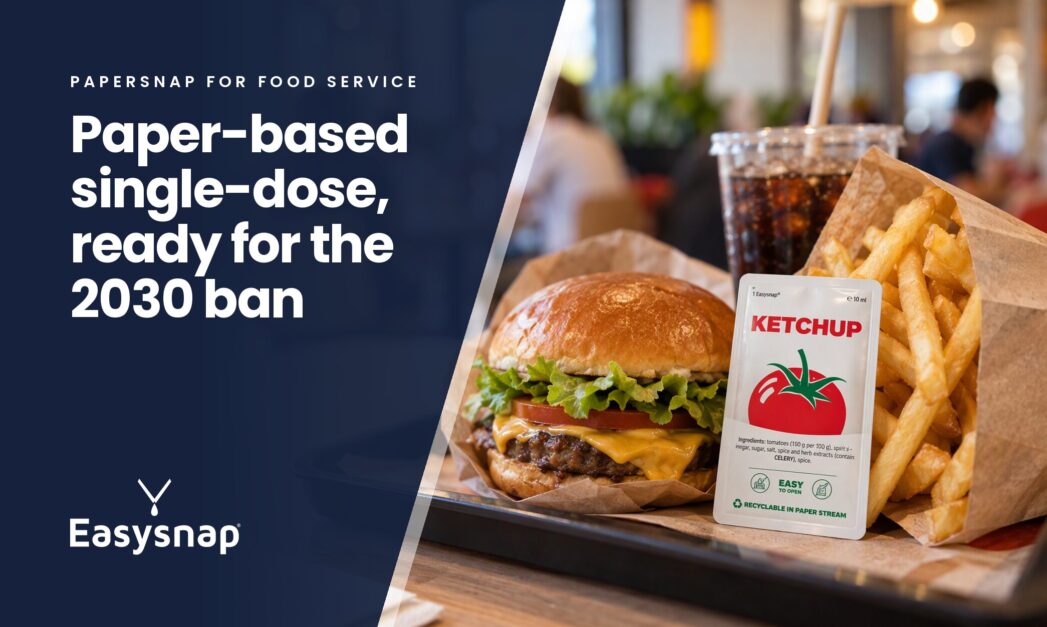


From 1 January 2030, single-use plastic portion packs for condiments, sauces, preserves, sugar, coffee creamer and seasoning are restricted in hotels, restaurants and cafés across the EU. The rule targets plastic, not single portions. Here is what is covered, what is exempt, and how food service can keep single portions in a paper-based pack.
Key facts
- Rule: Regulation (EU) 2025/40 (PPWR), Article 25 and Annex V, point 4.
- Start date: 1 January 2030.
- Scope: single-use plastic packaging containing individual portions of condiments, preserves, sauces, coffee creamer, sugar and seasoning in the HoReCa sector.
- Main exception: portion packs supplied together with ready-prepared take-away food for immediate consumption.
- Who is in scope: all packaging placed on the EU market, wherever it is produced.
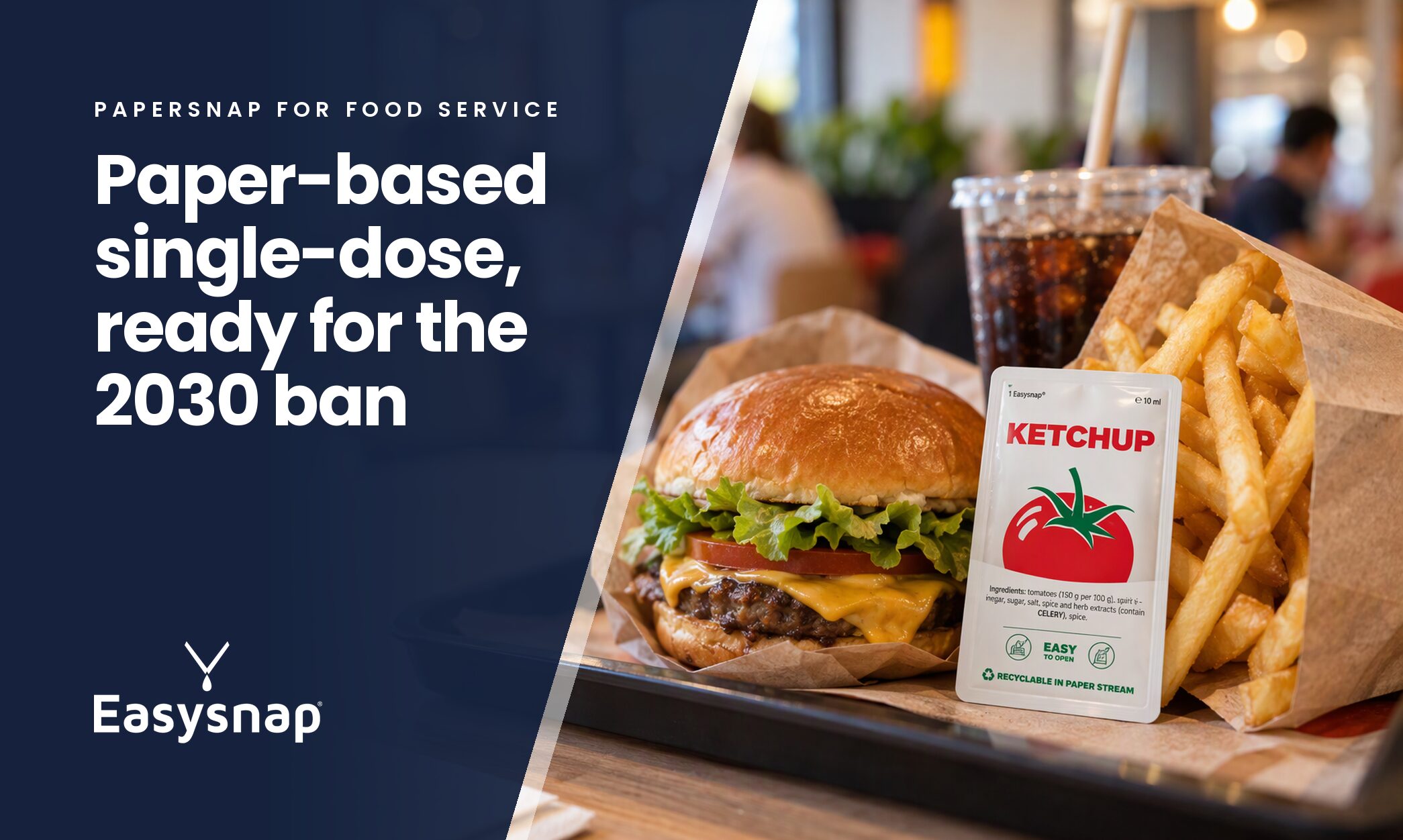
- Paper-based option: Papersnap®, over 80% paper and under 5% plastic, opened with one hand — ready for PPWR.1
Few sectors lean on single portions as heavily as food service. Sauces, dressings, condiments, spreads, samples: the single-dose format solves real problems at the counter — hygiene, portion control, less food waste, speed of service. The catch is what most of it is made of: plastic sachets, stick packs and thermoformed cups sealed with a peelable film lid.
What exactly is restricted from 2030?
The Packaging and Packaging Waste Regulation (PPWR), Regulation (EU) 2025/40, has applied across the EU since 12 August 2026. Its Article 25 and Annex V list packaging formats that can no longer be placed on the market for specific uses from 1 January 2030.
Point 4 of Annex V covers single-use plastic packaging used in the hotel, restaurant and catering (HoReCa) sector to contain individual portions of condiments, preserves, sauces, coffee creamer, sugar and seasoning. In practice, that is the formats most tables rely on today: ketchup and mayonnaise sachets, mustard and dressing sticks, jam portion cups, creamer pots. If they are single-use plastic and served for consumption on the premises, they fall within the restriction.
What is exempt?
Annex V, point 4 provides two exceptions. The one that matters most for food service covers portion packs supplied together with ready-prepared take-away food intended for immediate consumption — the sachet that goes in the bag with a take-away meal. Dine-in service has no such exception.
The line to draw in your range is therefore channel by channel, not product by product: what is served at the table versus what leaves with take-away food. For the exact wording of both exceptions, refer to the full text of the Regulation on EUR-Lex.
Who needs to act?
- Operators — hotels, restaurants, cafés and caterers: the portions on their tables, counters and breakfast buffets.
- Brands and producers that supply portion packs to HoReCa: the packaging they place on the market for that channel.
- Distributors: the portion-pack listings they offer to food-service customers.
The restriction applies to all packaging placed on the EU market, so suppliers outside the EU that sell into European food service are in scope too.
Keep single portions, switch to a paper-based pack
The regulation doesn’t end single portions at the table; it ends plastic ones. Moving to Papersnap is a packaging change: a new single-dose pack, made of over 80% paper and under 5% plastic. Under the European Commission’s interpretive guidance on PPWR1, composite packaging below that plastic share is not classified as plastic packaging — which is why we describe Papersnap as ready for PPWR.
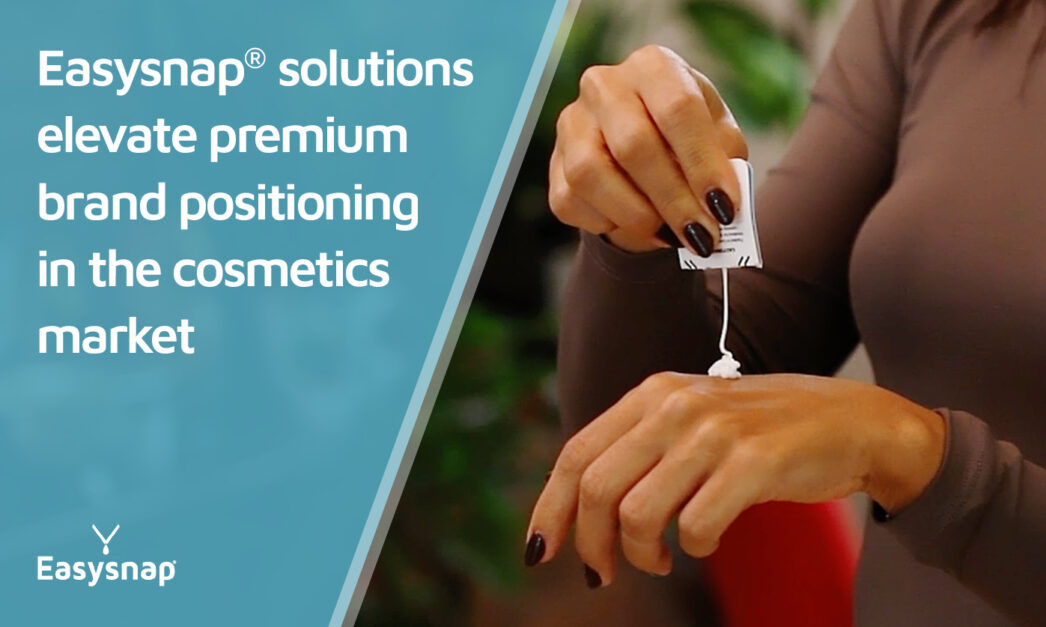
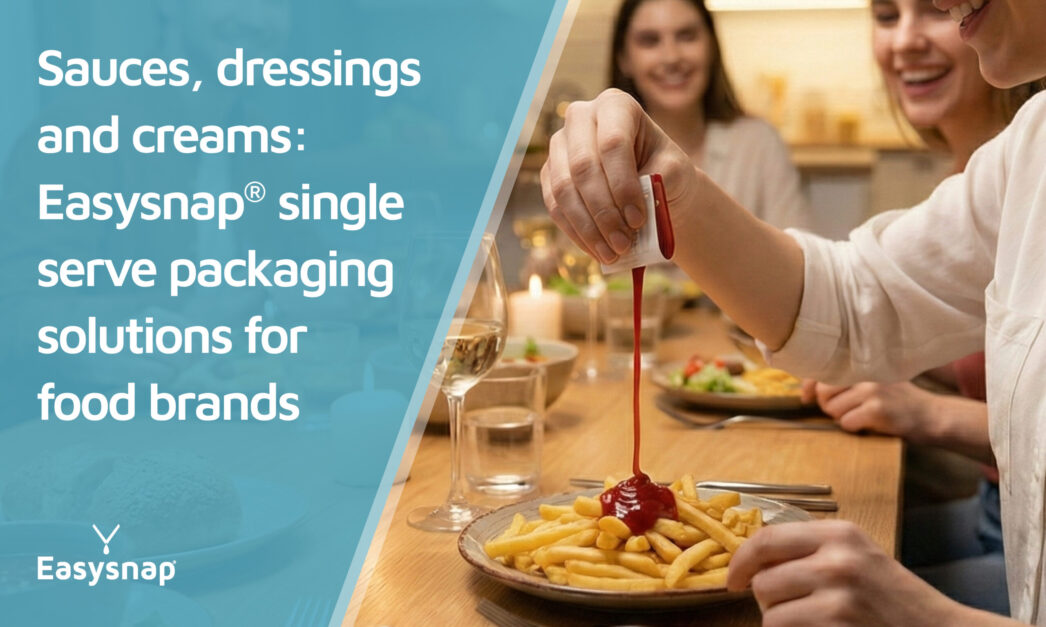
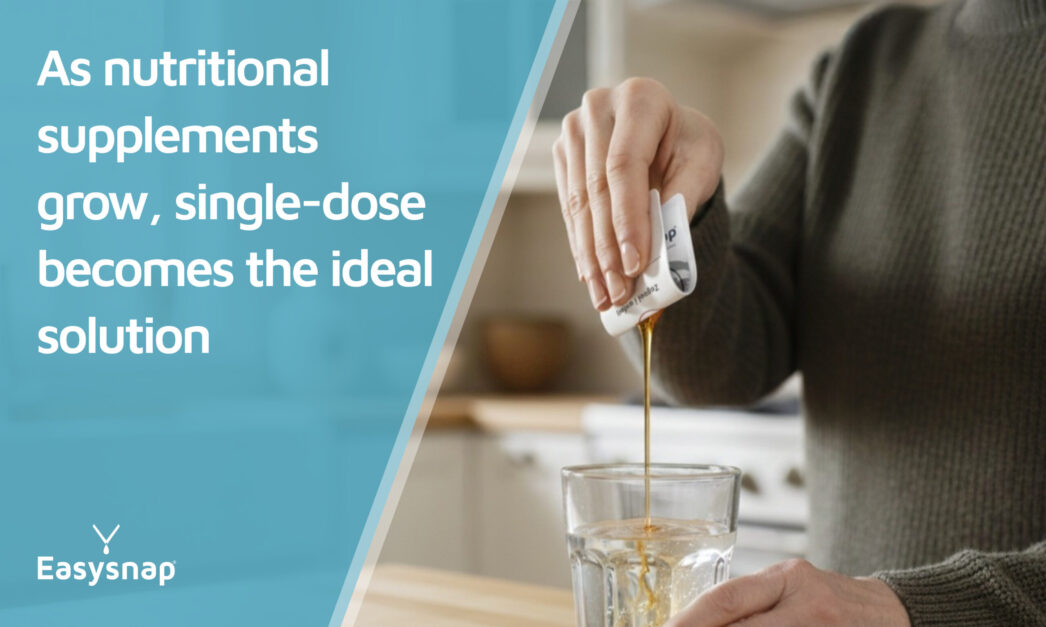
The new pack also brings a different way to open. Instead of tearing a sachet with two hands or peeling a film lid, one hand folds the pack and the product comes out cleanly and precisely, right where it’s needed, with no loose parts left on the table. It is the same one-hand opening as the Easysnap pack, in a paper-based structure.
For the third-party recyclability assessments behind Papersnap, read What PPWR means for food service brands; for the wider regulatory picture, see the future of sustainable single-dose packaging under the PPWR.
Where paper-based single-dose fits
- Table sauces and condiments: ketchup, mayonnaise, mustard
- Dressings and dips
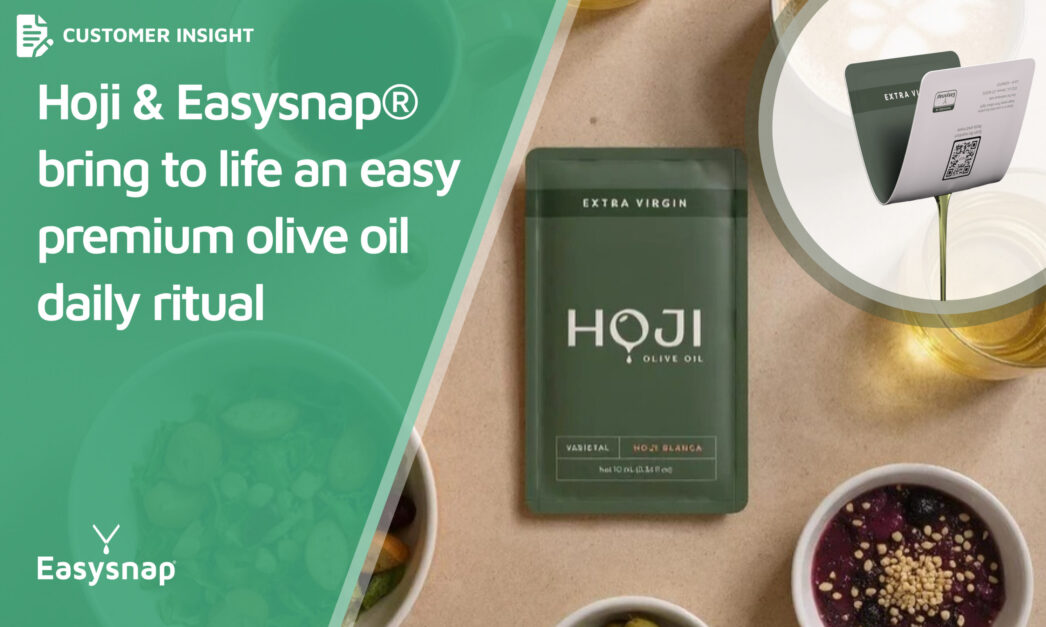
- Honey, jams and breakfast spreads for hotel and café service
- Take-away and delivery portions — outside the 2030 restriction, but often part of the same range and the same purchasing decision
- Samples and on-the-go formats
Fit is confirmed product by product — viscosity, fill volume, shelf life — in a pilot, not on paper. See how single-dose works across food applications.
What to do before 2030
- Map your portions by channel and material. What is served on the premises, what goes out with take-away food, and what each pack is made of.
- Prioritise dine-in volumes. Those are the portions the 2030 restriction covers.
- Test the fit on your product. Run a pilot run to check viscosity, fill volume, shelf life and service on real volumes.
- Choose how to produce. Start with food co-packing at Easysnap, then decide how to scale: staying in co-packing, with a co-packer close to your market, or with an Easysnap line in your own plant.
- Switch at range level, ahead of the deadline. Not one SKU at a time in 2029.
The takeaway
Food service doesn’t have to choose between the convenience of single-dose and the direction of the rules. Paper-based single-dose lets operators keep serving single portions with a new pack — planned ahead of 2030 instead of in a rush.
Exploring it for your menu or product? Contact us.
PPWR and HoReCa portion packs: frequently asked questions
When does the PPWR ban on HoReCa portion packs start?
On 1 January 2030. The PPWR has applied since 12 August 2026; the format restrictions listed in Annex V, including point 4 on HoReCa portion packs, apply from 1 January 2030.
Which products does Annex V, point 4 cover?
Single-use plastic packaging in the HoReCa sector that contains individual portions of condiments, preserves, sauces, coffee creamer, sugar and seasoning.
Does the ban apply to take-away sauces?
Not when the portion packs are supplied together with ready-prepared take-away food intended for immediate consumption. Portions served for consumption on the premises are covered.
Is a paper-based portion pack covered by the ban?
The restriction applies to single-use plastic packaging. Under the European Commission’s interpretive guidance, composite packaging with a plastic share below 5% is not classified as plastic packaging. The guidance is not legally binding and final test methods are still pending, so classification should be confirmed case by case.
What is Papersnap?
Papersnap is a paper-based single-dose pack by Easysnap Technology: over 80% paper, under 5% plastic, opened with one hand by folding the pack. It is designed for liquid and semi-liquid products such as sauces, condiments, dressings and spreads.
Can I test Papersnap before switching my range?
Yes. A pilot run in Easysnap food co-packing confirms the fit on your product — viscosity, fill volume, shelf life — before you decide how to scale.
1 European Commission Notice on the interpretation of the PPWR (March 2026). The guidance is interpretive and not legally binding; final test methods are still pending. Classification should be confirmed case by case. ↩