

What PPWR means for Food Service brands
Europe's packaging rules have moved. The Packaging and Packaging Waste Regulation (PPWR) — Regulation (EU) 2025/40 — entered into force on 11 February 2025 and has applied across the EU since 12 August 2026. It points the whole market in one direction: less single-use plastic, more material that can actually be recovered. For brands built on single-dose formats — sauces, condiments, dressings, spreads, samples — it's a question worth acting on now.
The tension: convenience vs. plastic
Single-dose earns its place in food service: portion control, hygiene, no waste per serving, a clean on-the-go experience. The friction is the material — conventional condiment packaging and sauce sachets are largely plastic, exactly what the regulation is steering the market away from. The answer isn't to give up single-dose. It's to rethink what it's made of.
We looked at the wider regulatory picture in the future of sustainable single-dose packaging under the PPWR. This article is narrower and more practical: what changes for food service, where portions are served outside the home and the pack is part of the experience.
Where paper-based single-dose fits
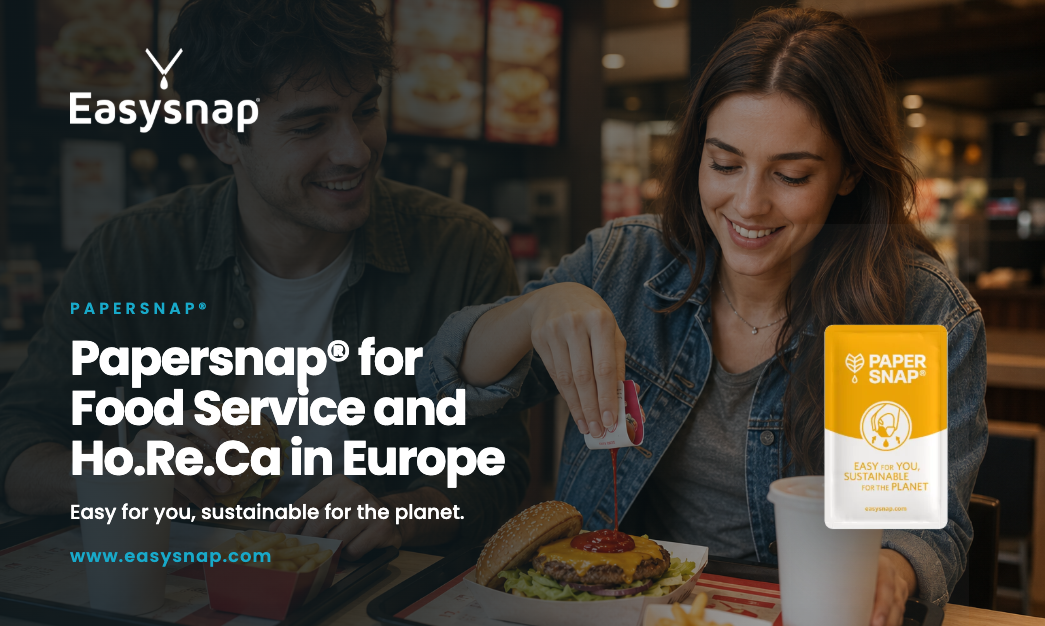
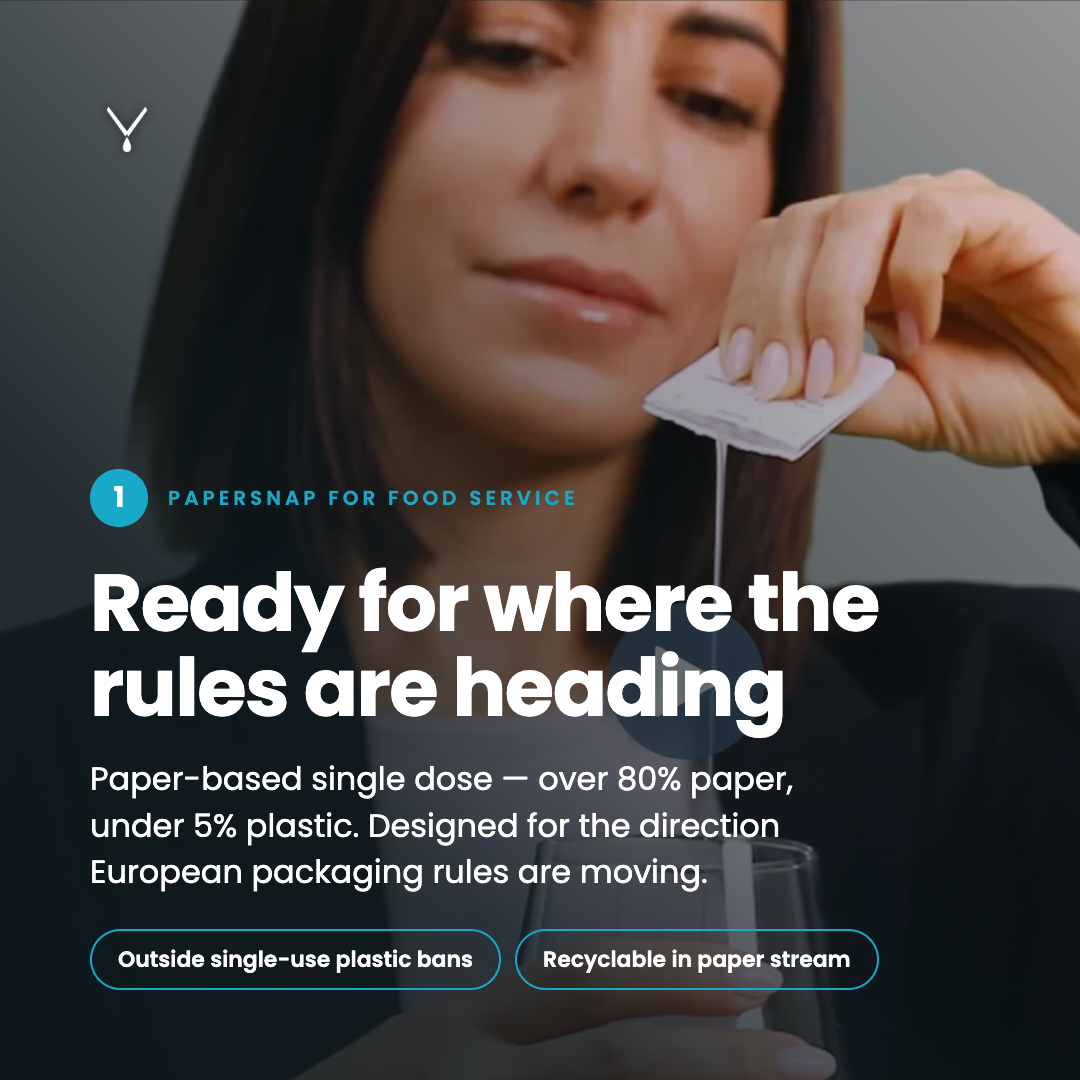
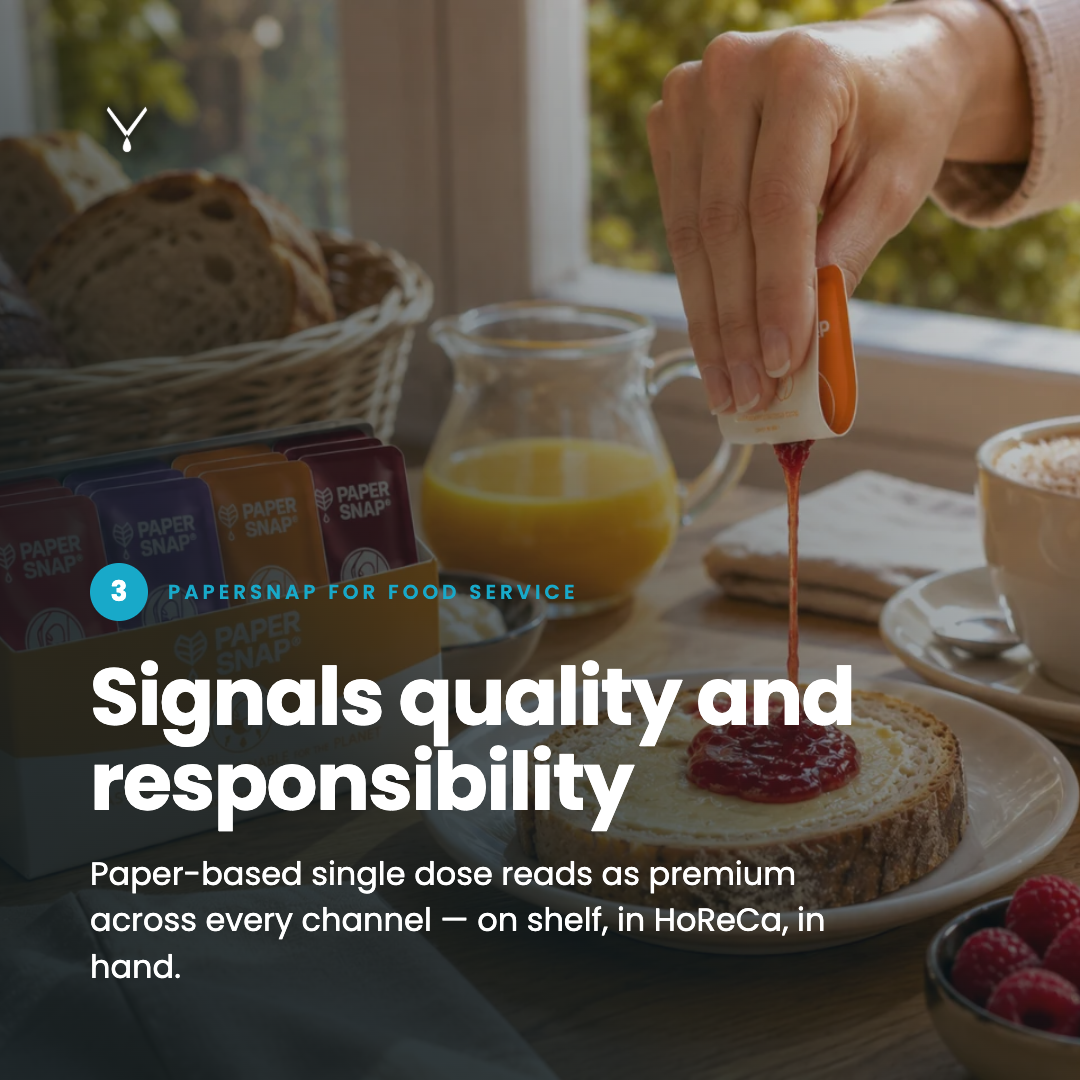
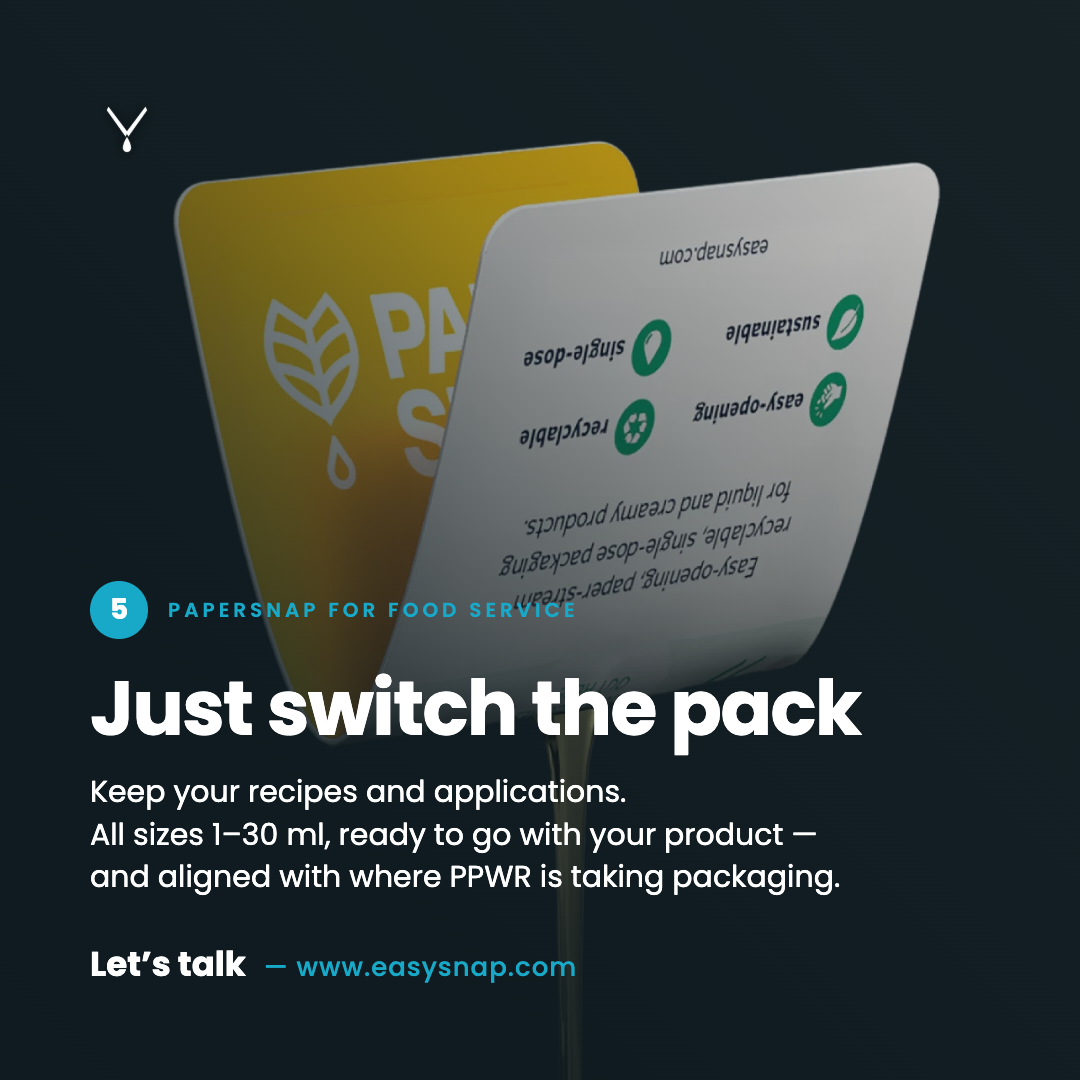
Papersnap is a paper-based single-dose format: over 80% paper, under 5% plastic. It's designed for the direction European packaging rules are heading — and, unlike a lot of "eco" claims, the substance is independently verified:
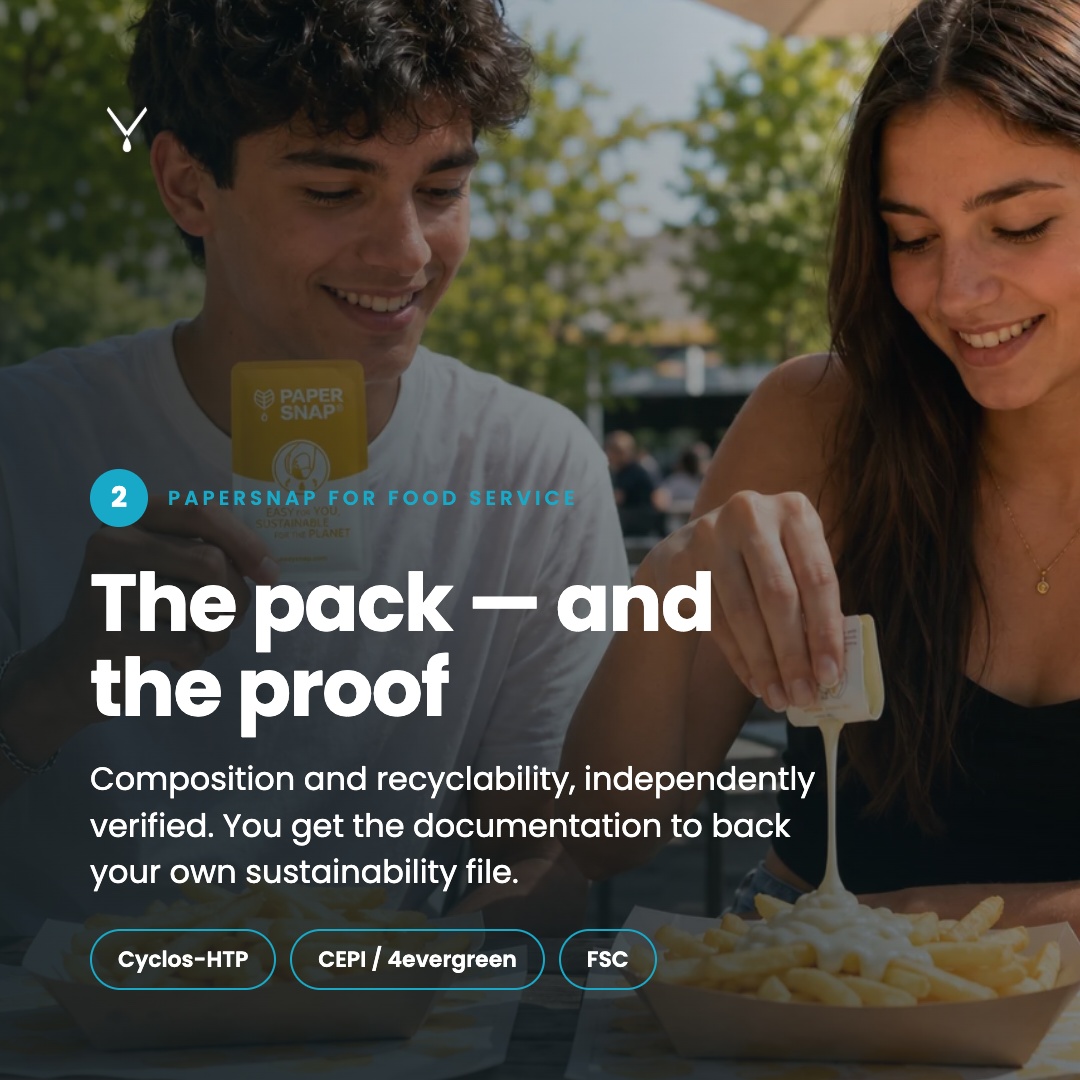
- Recyclable in the standard paper stream — Cyclos-HTP certified.
- Assessed as technically recyclable under the CEPI / 4evergreen recyclability evaluation protocol.
- FSC Chain of Custody: paper fibre from responsibly managed forests.
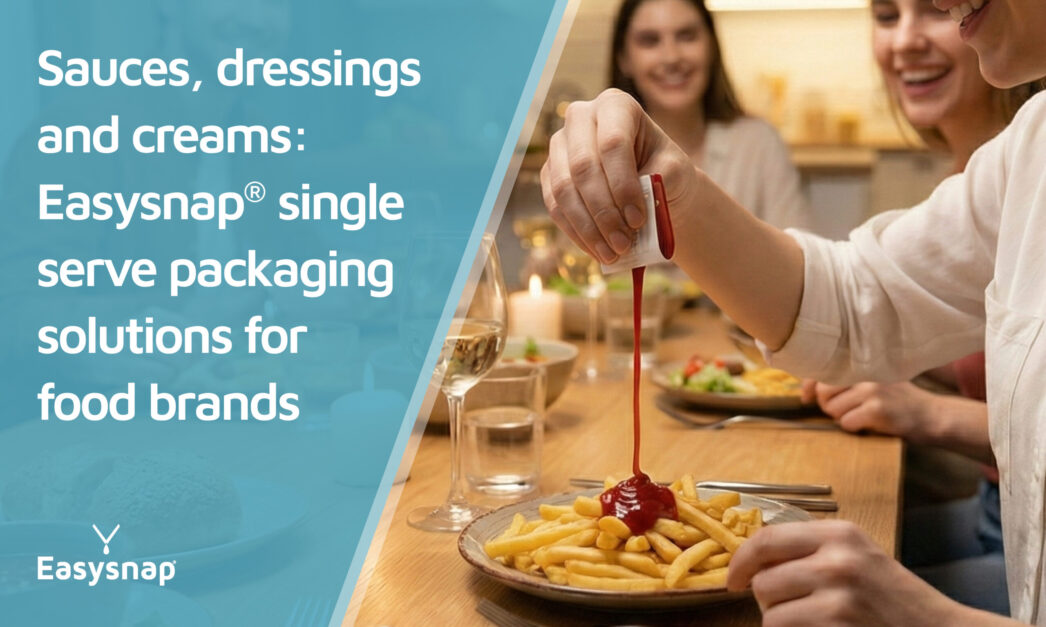
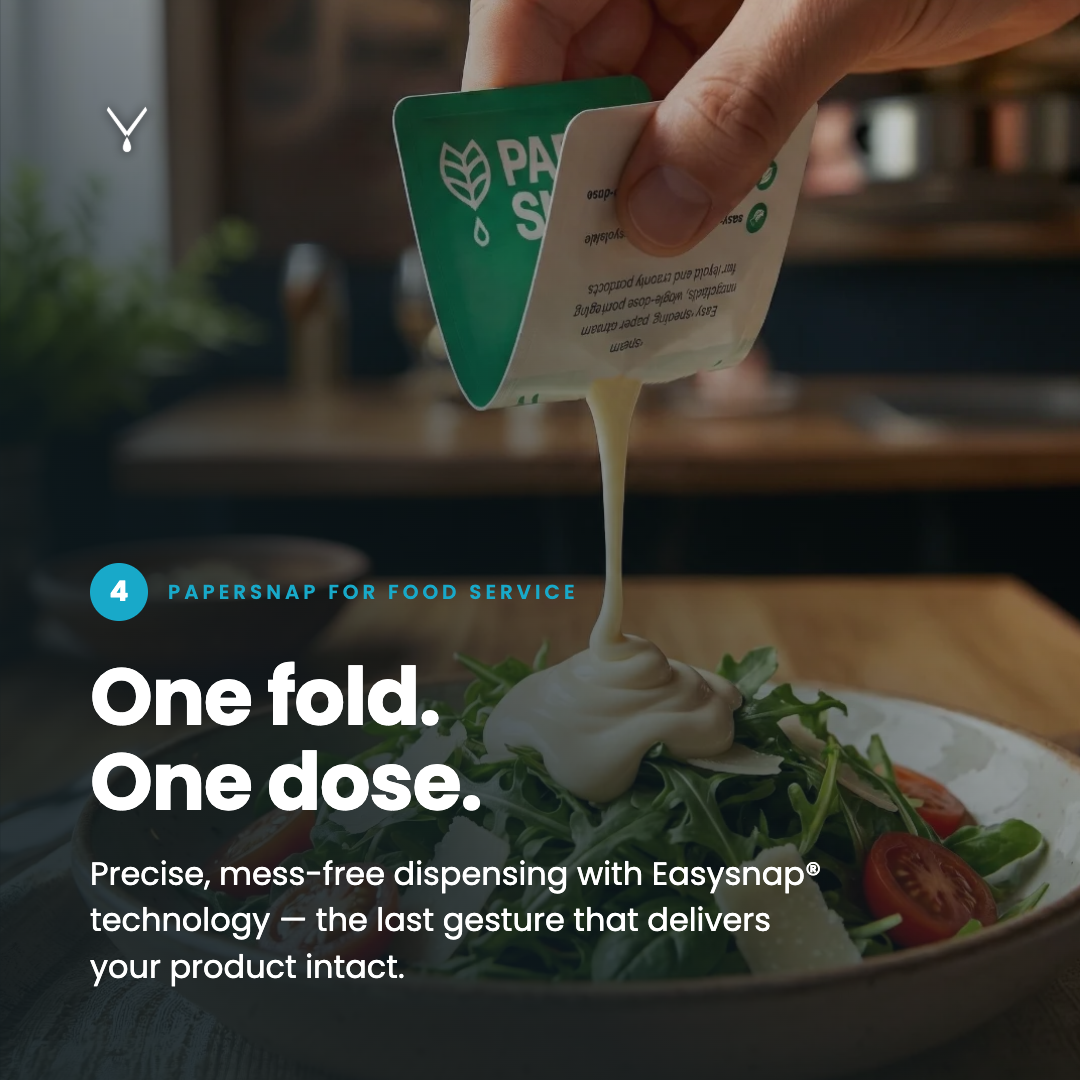
And the experience doesn't change. One hand opens the pack — fold, press — and the product is dispensed precisely, where it's needed. Packaging is the last gesture that delivers your product intact, and Papersnap keeps that gesture simple enough for everyone to open.
The pack is half the answer. The proof is the other half.
Moving on sustainability isn't only about the pack — it's about being able to show your work. With every Papersnap format you get more than the packaging: the composition data and the third-party recyclability assessments to support your own sustainability documentation.
You set the target. Papersnap gives you the pack and the proof to hit it.
What food-service brands can do now
- Map which of your formats rely most on single-use plastic.
- Identify products where a paper-based single-dose could substitute without changing the experience.
- Test with real volumes before committing — through food co-packing and a pilot run, with no capital investment.
Easy for people, sustainable for the planet. Ready to explore it for your product? Contact us.
PPWR and single-dose packaging: frequently asked questions
What is the PPWR?
The PPWR is Regulation (EU) 2025/40, the European Union's Packaging and Packaging Waste Regulation. It replaces the previous packaging directive and, being a regulation, applies directly in every member state without national transposition. Its aim is to reduce packaging waste, make all packaging recyclable and cut avoidable single-use plastic.
When does the PPWR come into force?
It entered into force on 11 February 2025 and has applied since 12 August 2026. Further obligations — on recycled content, recyclability performance grades and reuse targets — phase in towards 2030, 2035 and 2040.
Does the PPWR apply to companies outside the EU?
Yes. It covers all packaging placed on the EU market, regardless of where it was produced. A brand in the UK, the US or Asia that exports single-dose packs into the EU is in scope.
Are paper-based sachets recyclable?
Not automatically — it depends on the laminate structure, the coatings and the amount of plastic left in the pack. This is why third-party assessment matters. Papersnap is Cyclos-HTP certified as recyclable in the standard paper stream and has been assessed as technically recyclable under the CEPI / 4evergreen protocol.
Does switching to paper change how the pack works?
No. Papersnap keeps the one-hand opening gesture and the high restitution of the original format: the same portion control and the same clean dispensing, in a paper-based structure.